
 01
Electrical Repair
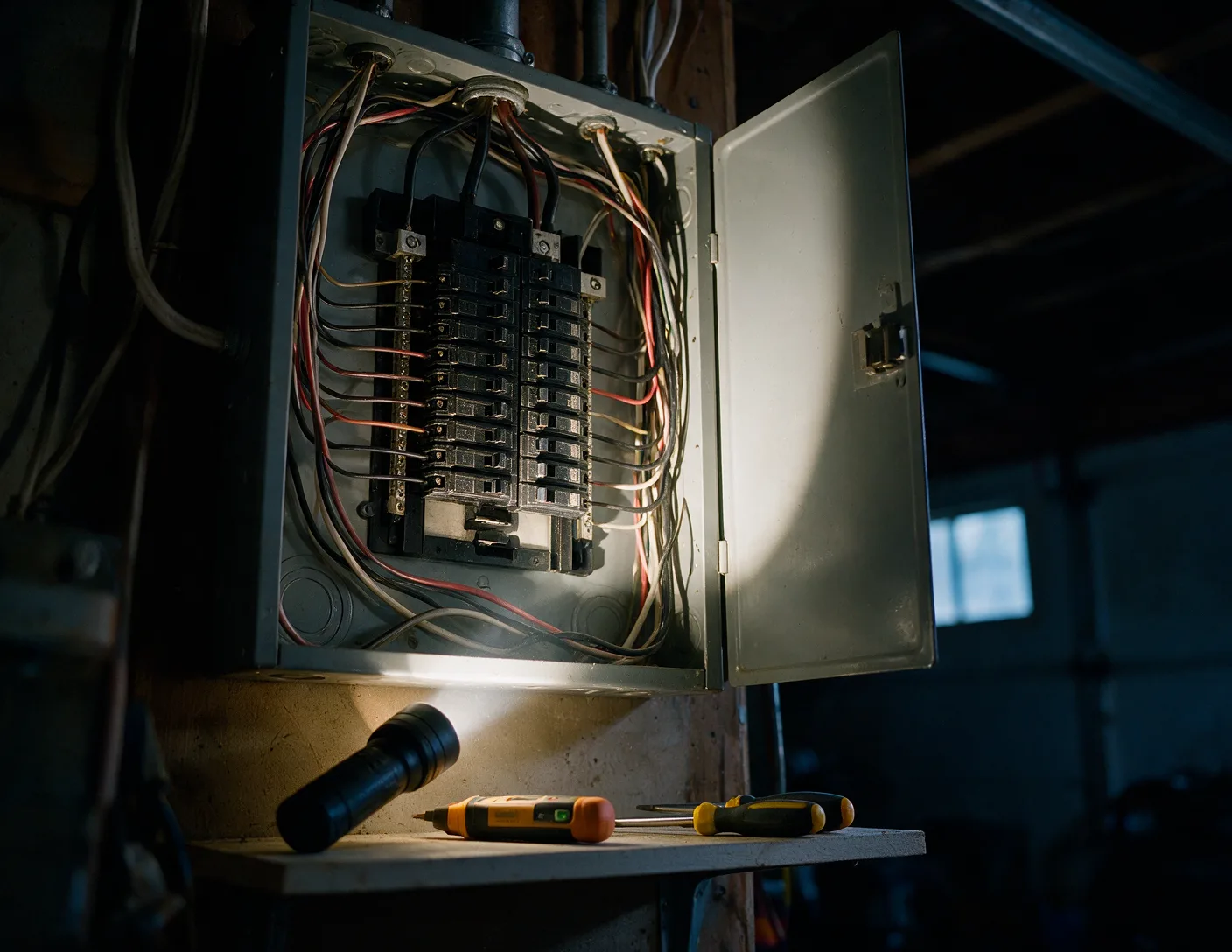
Technicians test for voltage at the load side of breakers, inspect neutral bars for corrosion, and replace damaged conductors while maintaining proper bend radius in raceways.
Electrician · the USA
Ikon Electrical Services sends technicians nationwide to locate and correct electrical faults in homes and commercial buildings before they cause outages or fire hazards.
Technicians use toner probes to follow each conductor from panel to endpoint and identify hidden splices or damaged insulation.
Current on each leg is measured under actual appliance draw so no single phase exceeds eighty percent of its rating.
Bonding jumpers and rod resistance are checked with a fall-of-potential tester before any energized work begins.
Our technicians perform targeted diagnostics and repairs on existing systems plus new installations. Every visit includes verification of voltage drop, polarity, and torque values at terminations.
01Technicians test for voltage at the load side of breakers, inspect neutral bars for corrosion, and replace damaged conductors while maintaining proper bend radius in raceways.
 02
Main lugs are replaced with higher amperage units after calculating total connected load and confirming service entrance conductor size meets the new rating.
 03
Nonmetallic cable is run parallel to joists with staples at proper intervals, and junctions are housed in accessible boxes with cover plates secured.
 04
Receptacles are checked for proper hot-neutral-ground orientation using a three-light tester, then tightened to manufacturer torque specs before covers are reinstalled.
 05
Fixtures are mounted to listed junction boxes, and luminaire disconnects are installed on recessed cans so ballasts can be replaced without disturbing ceiling finishes.
 06
New circuits are pulled in EMT or NM cable sized for the anticipated load, with dedicated neutrals where required for electronic equipment.
 07
Faulty breakers are swapped only after the bus bar is cleaned and the panel is de-energized, confirming the replacement matches the original interrupting rating.
 08
Visual examination covers every accessible junction, followed by infrared scanning of terminations and verification that all devices carry the correct UL listing marks.
Burning plastic odor near outlets indicates insulation breakdown and requires immediate isolation of the circuit at the breaker. Sparking or buzzing switches point to loose connections that can arc and ignite surrounding material. Any outlet that feels warm when touched or shows black scorch marks around the slots must be taken out of service until a technician measures resistance across the contacts.
Turn off the breaker that serves the affected area before unplugging any cords. Do not reset a tripped breaker more than once if it trips again immediately; repeated attempts can weld internal contacts inside the device. Leave the panel door closed and keep children and pets away from the area until power is confirmed off at the main disconnect.
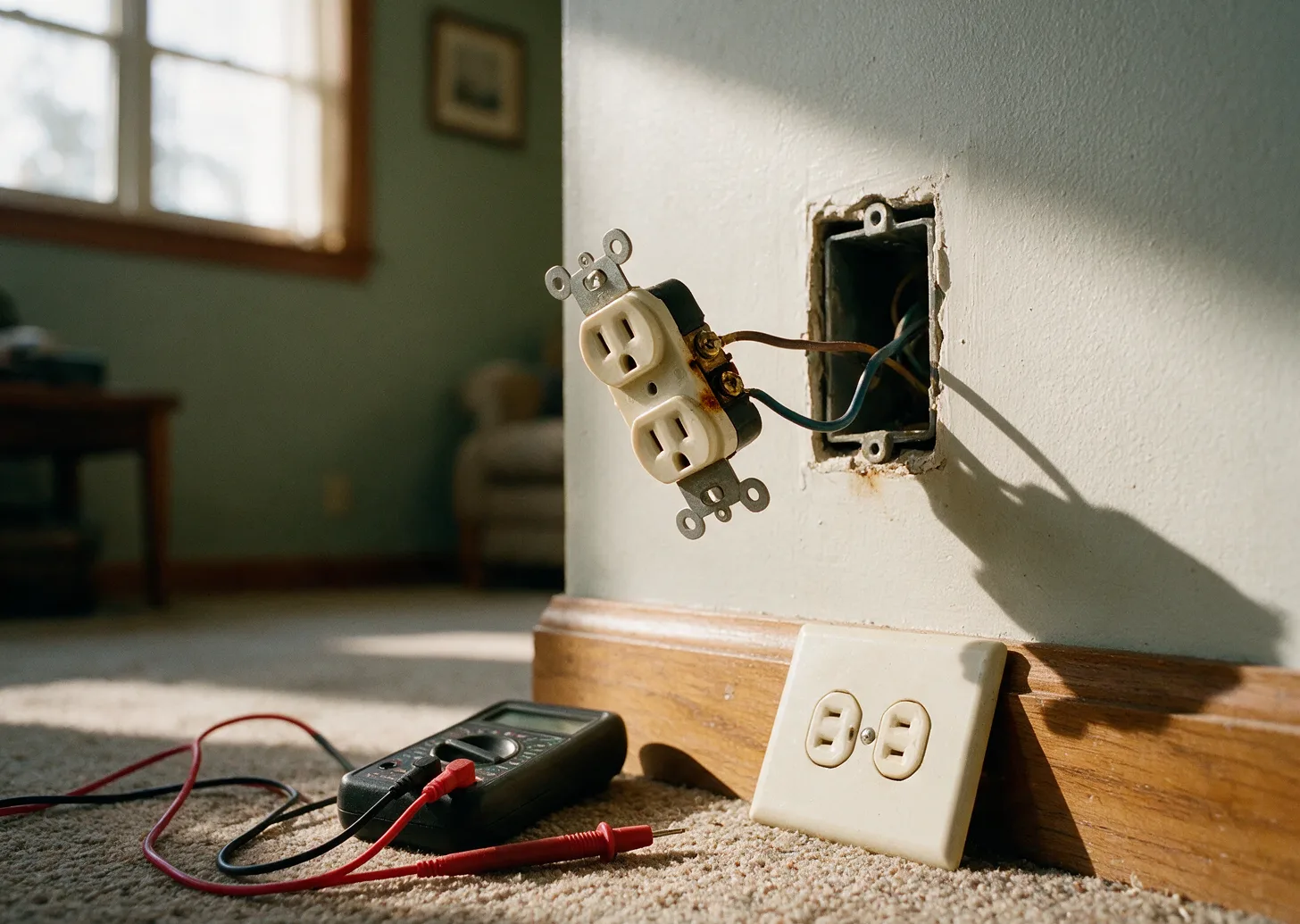
Our technicians follow a fixed sequence that begins with isolation of the fault and ends with verification that all affected circuits operate within their rated limits.
The main breaker or affected branch is turned off and locked out, then absence of voltage is confirmed on every conductor that will be touched during the repair.
Continuity and insulation-resistance tests are performed from the panel outward until the exact location of the short, open, or ground fault is identified.
Damaged components are removed, new conductors or devices are installed with correct torque, and all connections are photographed for the job record.
Each circuit is re-energized one at a time while monitoring current draw and temperature rise to confirm the repair restored normal function without creating new overloads.
Technicians first verify zero energy with a non-contact voltage tester on every conductor before removing any cover plates. They then open the panel, photograph the existing layout, and label each circuit before any testing begins. Voltage, amperage, and temperature readings are recorded at multiple points so the root cause can be isolated without guesswork.
A breaker showing signs of overheating or with a worn trip mechanism is replaced rather than repaired because internal calibration cannot be restored in the field. Conductors with visible insulation damage or melted strands are cut back to sound material and spliced only if the remaining length meets code minimums; otherwise the entire run is replaced to avoid hidden junctions behind walls.
The number of circuits that must be de-energized and the accessibility of the wiring path affect total labor time. Materials such as copper conductors, listed breakers, and approved junction boxes are selected to match existing equipment ratings rather than the lowest available grade. Travel distance across the USA and any requirement for permits or utility coordination are calculated separately so the final invoice reflects only the actual scope completed on site.
Knob-and-tube wiring is left in place only when insulation is intact and no splices exist outside junction boxes; otherwise it is abandoned and new cable is installed alongside. In rental properties the technician documents the condition of the service equipment and any tenant-added extension cords so the property owner receives a written description of what must be corrected before the unit is reoccupied.
Resetting a breaker more than once masks the underlying overload or short and can damage the panel bus. Technicians first measure the load on that circuit with a clamp meter before deciding whether the breaker itself or the downstream wiring requires replacement.
Only after confirming power is off at the breaker and using a voltage tester on the conductors. Polarity and ground continuity must still be verified with a plug-in tester once the new device is installed to avoid creating a shock hazard.
Loose lugs or overloaded breakers generate heat that transfers to the enclosure. A technician removes the cover, torques every connection to specification, and replaces any breaker showing discoloration or pitting on the contacts.
Flicker under motor start indicates voltage drop on the shared circuit. The technician measures voltage at the panel and at the load under running conditions to determine whether a dedicated circuit or larger conductors are required.
Buyers and inspectors often require documentation that aluminum branch wiring has been pigtailed or replaced and that two-prong receptacles have been updated to three-prong with proper grounding paths.
The technician records the existing condition of the service equipment and any tenant modifications so the owner receives a clear list of items that must be corrected to meet current installation standards before the next occupancy.
Reach Ikon Electrical Services when an electrical fault appears so technicians can isolate the circuit and restore safe operation across the USA.